In the modern era of instant connectivity and social media saturation, the old adage “it is not what you say, but how you say it” has moved from a simple piece of advice to a fundamental law of effective leadership. While many professionals focus their energy on the technical accuracy of their messages or the strategic depth of their policies, emerging psychological research and high-profile public debates suggest that communication tone is the true architect of influence. Whether in a boardroom, a political arena, or a family setting, the emotional resonance of a leader’s voice often dictates the success of their mission more than the data they present.
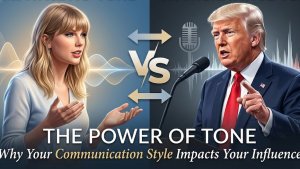
The Science of Emotional Resonance
Tone is the emotional subtext of communication. It carries the weight of intent, empathy, and authority. When a person speaks, the listener’s brain processes the verbal information (the message) and the non-verbal cues (the tone) simultaneously. However, the amygdala—the part of the brain responsible for emotional processing—often reacts to the tone before the prefrontal cortex can fully analyze the logic of the words.
If a leader delivers a message of “unity” with a harsh, dismissive, or condescending tone, the brain registers a conflict. This cognitive dissonance leads to a lack of trust. On the other hand, a leader who delivers difficult news with a tone of transparency and empathy can foster a sense of collective resilience. This phenomenon is why tone has the power to shape the emotional atmosphere of an entire organization or nation. It acts as a bridge or a barrier between the speaker and the audience.
Leadership Beyond Policy: The “Tone is Everything” Philosophy
Traditional views of leadership often prioritize tangible outcomes: economic growth, policy execution, or project completion. However, a growing movement of cultural icons and leadership experts argues that these results are often the byproduct of the environment created by a leader’s rhetoric. High-profile figures have recently ignited global debates by suggesting that leadership is not just about power behind closed doors, but about the language used to engage the public.
When a leader speaks with clarity and respect, they build social capital. This capital is what allows them to implement difficult policies later on. Conversely, a combative or divisive tone chips away at the social fabric. It creates a climate of mistrust where even beneficial actions are viewed through a lens of suspicion. In this context, tone is not a secondary factor; it is the foundation upon which all leadership actions are built.