The intersection of public life and personal struggle has long been a subject of fascination, but rarely does it offer as profound a lesson in emotional intelligence as the recent developments involving Taylor Swift and Travis Kelce. In an era where every movement is tracked by high-resolution lenses and every word is dissected by global algorithms, the way individuals choose to handle moments of profound vulnerability becomes a blueprint for modern resilience.
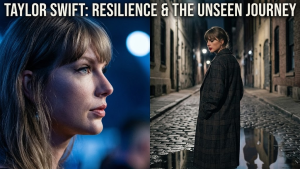
When news surfaced regarding a personal challenge facing Travis Kelce, the expectation from the digital world was a standard public relations rollout: a polished statement, a strategic press conference, or perhaps a curated social media post designed to control the narrative. Instead, the update arrived through a different channel—one that prioritized human connection over public image. It was Taylor Swift who reportedly facilitated this shift, choosing a path of restraint, directness, and quiet strength.
This approach offers a masterclass in “Service Journalism” for the modern age. By analyzing how these public figures navigate difficulty, we can extract universal truths about maintaining personal integrity and fostering growth even when the entire world is watching.
The Power of the “Quiet Reveal”
One of the most significant lessons from this situation is the value of the quiet reveal. In our personal lives, we often feel pressured to explain ourselves to everyone in our circle, or even to our broader social media networks, the moment something goes wrong. We feel an urgent need to “set the record straight” or manage how others perceive our struggles.
However, the restraint shown in this account suggests that true power lies in the absence of noise. By choosing not to amplify the situation through traditional media briefings, the focus remained on the person—Travis Kelce—rather than the “event.” This teaches us that in our own lives, especially during times of crisis, we do not owe a comprehensive explanation to the curious. Protecting the “personal reality” from the “public image” is not an act of secrecy; it is an act of self-preservation and respect for the process of healing.