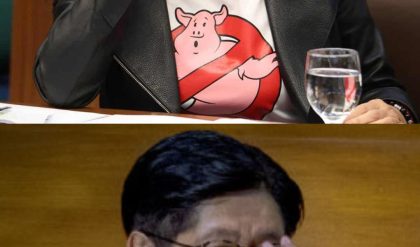
The bright lights of a television studio or the high-pressure environment of a corporate boardroom can often feel like a pressure cooker. In these moments, every gesture is magnified, every word is scrutinized, and the atmosphere can shift from professional to confrontational in a heartbeat. Observers often witness these high-stakes exchanges—moments where two powerful figures clash—and focus on the drama. However, the true lesson lies beneath the surface. It is found in the concept of executive presence: the ability to maintain absolute poise when faced with unexpected public challenges.

Maintaining composure is not merely about staying quiet; it is a strategic choice. It is the art of turning a moment of potential vulnerability into a demonstration of strength. When an individual is challenged publicly, the natural human instinct is “fight or flight”—either to snap back with a defensive remark or to withdraw in discomfort. True leaders, however, master a third path. They utilize poise as a tool for de-escalation and authority, proving that the person who remains the most controlled usually commands the room.
The Anatomy of a High-Stakes Confrontation
In any public disagreement, the challenge often begins with a pointed critique. Whether it is a peer questioning your credentials or a public figure dismissing your perspective based on your background, the goal of the challenger is often to knock you off balance. They rely on the hope that you will react emotionally, thereby validating their claim that you are “unprofessional” or “out of your depth.”
Executive presence requires a rejection of this bait. Instead of reacting to the heat of the moment, a poised individual absorbs the energy of the room. They understand that silence is not a sign of weakness; it is a sign of preparation. By refusing to interrupt, by maintaining steady eye contact, and by resisting the urge to offer a rehearsed one-liner, you force the challenger to sit in the weight of their own words. This shift in dynamics is palpable. It moves the focus from the “attack” to the “response,” placing the power back in the hands of the person who remains calm.
Strategic Silence as a Leadership Tool
One of the most effective ways to maintain presence is through the deliberate use of silence. In many professional settings, people feel the need to fill every second with speech, fearing that a pause will be interpreted as a lack of knowledge. In reality, a well-timed pause conveys confidence. It suggests that you are not rattled and that you are taking the time to formulate a response that is measured rather than reactive.
When you are faced with a public challenge, try the “five-second rule.” Before responding to a sharp comment, count to five mentally. This brief interval allows the adrenaline to subside and ensures that your opening statement is delivered with a steady voice. This technique also forces the audience to lean in. When someone speaks softly and deliberately after a period of silence, people listen more intently. You are no longer just a participant in a debate; you are the person setting the tempo of the conversation.